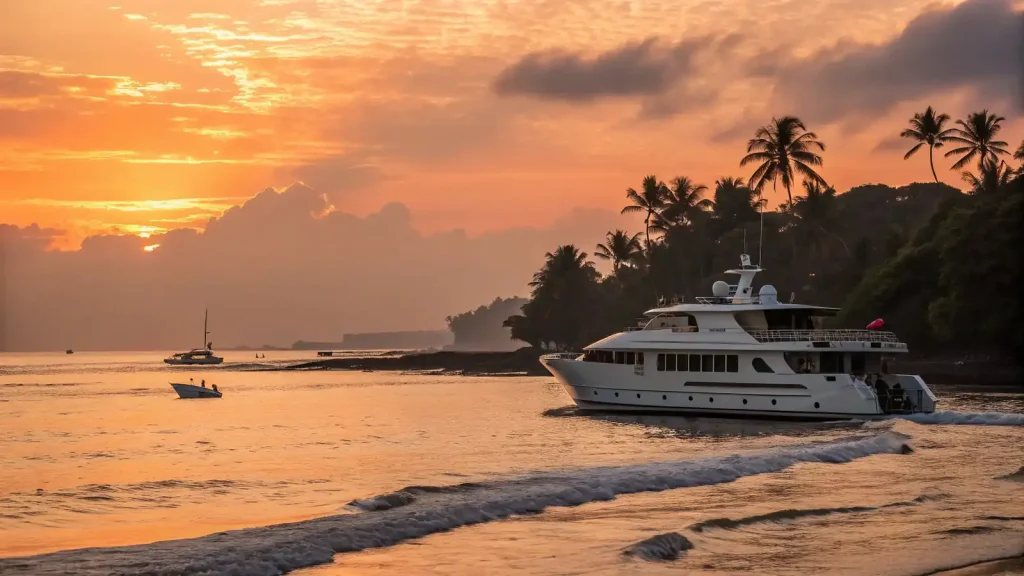
Bali Financial District Luxury Hotels vs. Seminyak Beachfront Resorts

Bali financial district luxury hotels are purpose-built for global executives, offering integrated high-tech suites, strategic proximity to corporate headquarters, and networking-focused amenities. This contrasts sharply with Seminyak’s beachfront resorts, which cater to leisure travelers with private pool villas, world-class spas, and a relaxed, coastal ambiance.
- Focus: Business efficiency vs. leisure and escape.
- Atmosphere: Sophisticated corporate energy vs. chic bohemian relaxation.
- Value: Time-saving and connectivity vs. privacy and rejuvenation.
The air shifts depending on where you stand in Bali. Here, on the polished marble terrace of a Seminyak villa, the immediate sensory input is the percussive crash of the Indian Ocean, just 50 meters away. The scent is frangipani and salt. The day’s rhythm is dictated by the sun and the tide. A mere 15 kilometers east, a different Bali is rising. The air hums with a new kind of energy, one of ambition and digital velocity. The scent is of opportunity, and the rhythm is the 24/7 pulse of global markets. This is the dichotomy facing the modern luxury traveler in Bali today: the established coastal allure of Seminyak versus the ascendant, corporate-driven sophistication of the new financial district. The choice of where you stay is no longer just about a room; it’s a declaration of intent for your time on the Island of the Gods.
The Vibe: Corporate Power vs. Coastal Chic
The atmosphere of a place is its most defining, yet intangible, quality. Seminyak has spent the last 25 years cultivating a specific brand of coastal chic. It’s a meticulously curated world of high-end boutiques like Magali Pascal, art galleries showcasing Indonesian artists, and winding lanes that reward exploration. The aesthetic is tropical modernism meets traditional Balinese craftsmanship. You see it in the hand-carved teak doorways of private villas and the open-air bamboo architecture of beach clubs. The clientele is a global mix of creatives, entrepreneurs, and families who value a certain brand of laid-back luxury. In contrast, the emerging Bali financial district projects an aura of sleek, corporate power. My sources on the development team speak of a master plan heavily influenced by Singapore’s Marina Bay and Dubai’s DIFC. We’re talking about gleaming glass towers, LEED-certified green buildings covering over 40% of the area, and integrated smart-city technology. The vibe is one of efficiency, ambition, and global connectivity. It’s a place designed for the C-suite executive whose time is measured in basis points and who requires seamless transitions between a board meeting, a capital raise dinner, and a flight to Hong Kong. This is not the Bali of Eat, Pray, Love; this is the Bali of Forbes and The Financial Times.
Accommodations: Sleek Towers and Integrated Luxury
When we talk about Bali financial district luxury hotels, we are discussing a new archetype for the island. These are not sprawling resorts with thatched-roof villas. Instead, expect vertically integrated properties within mixed-use towers, directly connected to office spaces, convention centers, and high-end retail. I’ve seen blueprints for suites that are essentially high-tech command centers: one-touch smart-room controls, holographic conferencing capabilities, and soundproofing that can mute the outside world entirely. Executive lounges will not be mere breakfast spots but exclusive, biometrically-secured clubs for high-level networking, offering panoramic views over the Badung Strait. Brands like Ritz-Carlton, Park Hyatt, and Waldorf Astoria are the likely contenders for these flagship properties, bringing a standard of business-focused service currently unavailable elsewhere on the island. The emphasis is on frictionless living. Imagine your day: a 7 AM video call from your suite, a 9 AM meeting in the same building, a 1 PM power lunch downstairs, and a 4 PM session in the hotel’s private spa, all without ever stepping outside. This hyper-efficiency is the core value proposition, a stark departure from the meandering, discovery-based experience of a traditional Bali holiday.
Seminyak’s Enduring Allure: Villas, Spas, and Sunset Rituals
While the financial district builds for the future, Seminyak luxuriates in its present perfection. The ultimate currency here is not time, but space and privacy. The quintessential Seminyak accommodation is the private pool villa, a walled compound offering anything from 200 to 1,000 square meters of personal paradise. Properties like The Legian Seminyak or W Bali – Seminyak have perfected this model, providing hotel-level service—private butlers, in-villa dining, 24/7 concierge—within a completely secluded environment. The wellness culture is deeply embedded, with world-renowned spas offering treatments that blend ancient Balinese healing with modern science. A 90-minute massage at a top spa can range from 1,200,000 to 2,500,000 IDR, a small price for total rejuvenation. The day in Seminyak is often bookended by the sunset ritual. Thousands gather at iconic beach clubs like Potato Head and Ku De Ta, where the transition from day to night is a celebrated event, underscored by world-class DJs and craft cocktails. This is a lifestyle built around sensory pleasure and decompression, a powerful antidote to the pressures that the financial district’s clientele face daily. According to Indonesia’s official tourism site, this blend of luxury and culture continues to make Seminyak a top global destination.
Access and Proximity: The Strategic Advantage of the BIFC
For the business traveler, every minute saved is a competitive advantage. This is where the location of the bali international financial center, situated in the more central Sanur area, becomes a decisive factor. A trip from Ngurah Rai International Airport (DPS) to Seminyak, a distance of only 11 kilometers, can frequently take over an hour due to notoriously unpredictable traffic. The same journey to the BIFC site is a more predictable 25-30 minutes. This time-saving extends to other key destinations. A meeting in the provincial capital of Denpasar is a 15-minute drive, versus 45 minutes from Seminyak. A weekend escape to the cultural heart of Ubud is also significantly more accessible. This strategic positioning allows for a “work hard, play hard” itinerary that is simply not feasible from the west coast. One could conclude a day of meetings at 5 PM and still be in time for a tour of the Tegalalang Rice Terrace, part of Bali’s UNESCO-recognized cultural landscape, which showcases the ancient Subak irrigation system. To truly leverage this advantage, it is essential to plan your Bali International Financial Center itinerary with an understanding of travel times and logistical realities, turning a potential headache into a strategic asset.
Dining and Diversions: Boardrooms vs. Beach Clubs
The culinary and entertainment landscapes of these two locales are tailored to their distinct audiences. Seminyak’s “Eat Street” (Jalan Kayu Aya) is a vibrant, sprawling collection of world-class restaurants like Merah Putih and Sarong, where the focus is on innovative cuisine in a lively, social setting. The nightlife is centered around the beach clubs, which transform after dark into open-air party venues. The shopping is boutique-focused, featuring local designers and artisanal crafts. The financial district, by design, will offer a more curated and exclusive experience. I anticipate the arrival of Michelin-starred celebrity chef outposts, with an emphasis on private dining rooms and discreet, high-security environments perfect for closing a deal. Entertainment will likely revolve around exclusive, members-only clubs, high-stakes cigar lounges, and perhaps even a private auction house. Retail will be dominated by global luxury brands—think Rolex, Hermès, and Brioni—housed within a climate-controlled galleria. The choice is clear: in Seminyak, you dine and play in public, as part of a vibrant scene. In the financial district, the best experiences will happen behind closed doors, accessible only to a select few.
The Bottom Line: A Cost and Value Analysis
When evaluating luxury, price is only one part of the equation; value is the ultimate metric. A premier one-bedroom pool villa in Seminyak during high season can command rates between $500 and $1,200 USD per night. The value here is in the privacy, space, and direct access to a leisure-oriented lifestyle. It’s an investment in disconnection and personal well-being. The forthcoming Bali financial district luxury hotels will likely have a similar, if not slightly higher, price point, but their value proposition is entirely different. The value is measured in efficiency, connectivity, and opportunity. A corporate rate of $900 USD per night is justified if the hotel’s location and amenities save an executive four hours of travel time and facilitate a multi-million dollar deal. Understanding the full scope requires looking at Bali International Financial Center costs & what to budget for an entire trip, from secure transport to business services. For a comprehensive overview of the district’s offerings, our complete guide to the Bali International Financial Center is an essential resource. The decision ultimately rests on the traveler’s primary objective: are you buying an escape from the world, or a more efficient way to conquer it?
Quick FAQ
Can I combine a business trip at the BIFC with a leisure stay in Seminyak?
Absolutely. This is the ideal approach. I’d recommend allocating the core workdays to a hotel within the financial district for maximum efficiency. Then, transfer to a Seminyak beachfront resort for a 3-4 day period of decompression. The drive between the two areas is approximately 45-60 minutes, making for a seamless transition.
Are the luxury hotels in the financial district family-friendly?
While the primary focus is on the business traveler, the major 5-star brands expected to operate in the BIFC are experts in catering to “bleisure” travel. Expect them to offer executive-level family suites, sophisticated kids’ clubs, and curated family excursions, allowing executives to seamlessly blend work trips with family time.
What is the current economic outlook for Bali?
The outlook is exceptionally strong. The development of the Bali International Financial Center is a key part of Indonesia’s strategy to diversify its economy. With tourism rebounding to over 5.2 million foreign arrivals in 2023 and projected GDP growth for Indonesia hovering around 5%, the island is poised for a significant economic expansion, making it a prime location for investment and business.
Ultimately, the choice between Bali’s new financial district and its established beachfront enclave is a choice of purpose. One is an engine of commerce, a place to connect, build, and transact, powered by cutting-edge infrastructure. The other is a sanctuary for the soul, a place to disconnect, recharge, and indulge, powered by the sun and sea. The beauty is that modern Bali now offers both at the highest level. The discerning traveler no longer has to choose between work and wellness; they can simply choose the right address for each. To discover more about the future of business and luxury on the island, explore the vision of the bali international financial center.