
Investment sectors · construction
Commissioning a phinisi in Bulukumba
Fourteen to twenty-four months from design sign-off to first charter, paid in four to six tranches against visible progress. The build is not the hard part — supervising it from somewhere else is.
Figures dated 7 August 2026
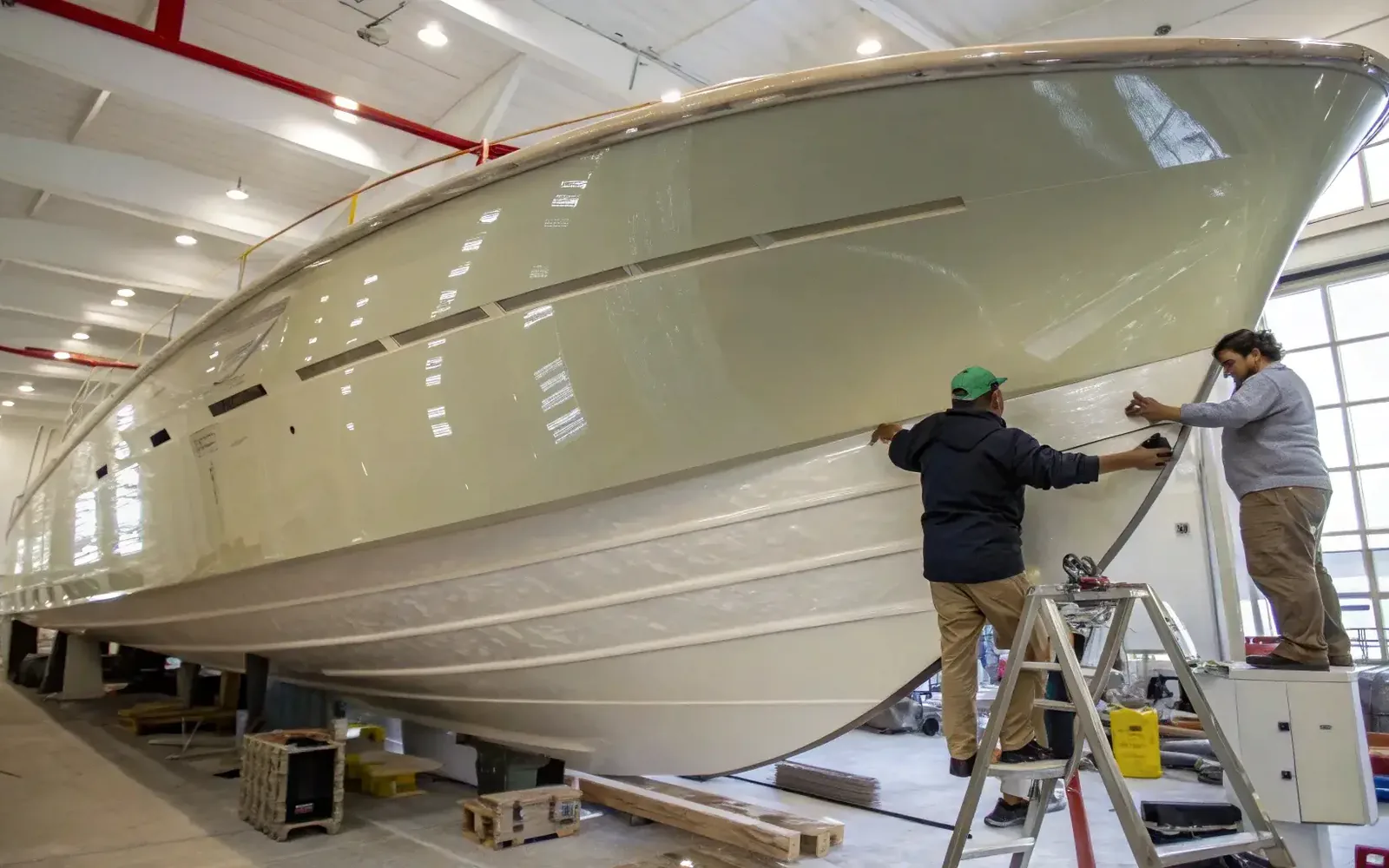
01 — The build
Four stages, and what each one takes
A working range for a new phinisi is 14 to 24 months. A 20 to 25 metre hull can be delivered in 10 to 14; a 30 to 40 metre luxury liveaboard with class and international-standard interiors usually needs 18 to 24.
-
01 2 – 3 months
Design and budget
Naval architecture, general arrangement layout and the budget that the rest of the contract is written against.
-
02 6 – 10 months
Hull and superstructure
The longest stage, and the one most exposed to weather and to the availability of specific craftsmen.
-
03 3 – 6 months
Machinery and fit-out
Engines, wiring, plumbing and carpentry. Where a specification either holds or quietly drifts.
-
04 1 – 2 months
Sea trials and flagging
Trials, documentation, class attendance and the punch list that has to close before final payment.
Yard capacity and the South Sulawesi rainy season can each add several weeks. Material lead times are the other common cause of slippage, and they are visible early if anyone is looking.
02 — Cost
What a new hull costs, by size
Indicative turnkey ranges from Bulukumba yards as of August 2026. Class, machinery, interior level and electronics move the final figure more than length alone.
- Basic wooden phinisi, 20 to 25 m Simple specification, delivered in roughly 10 to 14 months.
- from USD 100k
- Mid-range commercial, 20 to 30 m Better machinery and a guest-grade finish. The volume segment.
- from USD 250k
- Luxury charter phinisi, 25 to 40 m Ensuite cabins, generators and full hotel systems. The band most charter operators build in.
- from USD 500k
- Superyacht scale, 40 to 55 m Long lead times and a class society engaged from the start rather than at the end.
- from USD 1M
- Commercial-grade 30 to 40 m liveaboard The reference build. Commonly runs to USD 1.5M+ depending on class and finish.
- from USD 500k
Bulukumba prices below Bali because the craftspeople are concentrated there and yard overhead is lower; Bali yards skew toward composite and refit work at higher land and labour cost. Finishing and regulatory work is often coordinated through Bali, Labuan Bajo or Jakarta depending on class society and planned operating area.
What the contract has to carry
- Payment stages
- Four to six tranches — booking and design, keel laying, mid-hull, machinery and systems, interior completion, and final payment after sea trials and snagging
- Technical annexes
- Materials, class requirements and delivery dates listed as annexes, not described in the body. Contracts are usually bilingual English and Indonesian
- Class
- BKI as standard, with Lloyd's, RINA or ABS where the operating plan or a lender requires it. Surveyors attend at milestones, so the schedule has to accommodate them
- Supervision
- An independent surveyor or technical superintendent representing the buyer, with photo, video and written reporting on a fixed cadence
- Ownership
- Vessels normally sit in an Indonesian company, often a PT PMA, which can employ crew and hold domestic licences. Foreign individuals generally do not register a vessel in their own name
- Residency
- An investor KITAS makes banking and directorship simpler but is not a substitute for company and flag registration
03 — Specification
Six decisions the charter rate depends on
Made at design stage, paid for over the boat's life. Each of these shows up later as either a rate or a complaint.
Charter licensing requirements in Indonesia change periodically, particularly around safety and passenger limits. Every legal interpretation here goes to licensed law firms; this desk coordinates yards, surveyors and advisers rather than advising.
How long does a phinisi build take?
Basic 20 to 25 metre hulls can be finished in roughly 10 to 14 months. A 30 to 40 metre luxury charter vessel usually needs 18 to 24 including class, interiors and sea trials. Weather in Bulukumba, material lead times and the availability of key craftsmen all move the delivery date.
What does a new build cost by size?
USD 100k to 250k for a simple 20 to 25 metre boat, USD 250k to 500k for mid-range 20 to 30 metre vessels, and USD 500k to 1M+ for a 25 to 40 metre luxury charter phinisi. Projects at 40 to 55 metres commonly sit in the USD 1 to 3M+ band. Class, machinery, interior level and electronics decide where in the band you land.
How are payments staged?
Most Bulukumba yards agree four to six stages: a non-refundable design and slot fee, a keel-laying payment, a mid-construction tranche, a machinery and systems tranche, then final payment after sea trials and punch-list resolution. Some owners add escrow or a supervision arrangement to monitor quality between tranches.
Who supervises the yard?
Owners appoint an independent surveyor, a technical superintendent, or a construction desk to represent their interests on site. Class surveyors attend at key milestones. Regular photo, video and written reporting is standard, and is what makes remote supervision workable at all.
Which specifications matter most for charter return?
Cabin count and an all-ensuite layout, generous shaded deck area, efficient air conditioning, low noise and vibration, fuel-efficient engines and reliable generators. Compliance with charter licensing, strong safety equipment and a good guest finish are what make premium itineraries sellable.
See a hull on the stocks before you sign for one
A Bulukumba yard visit can be staged alongside a Komodo inspection cruise, so you see boats being built and boats being chartered in the same trip. Independent surveyors are arranged separately, on your side of the table.