
The register · comparison
Bali IFC versus Singapore & Hong Kong
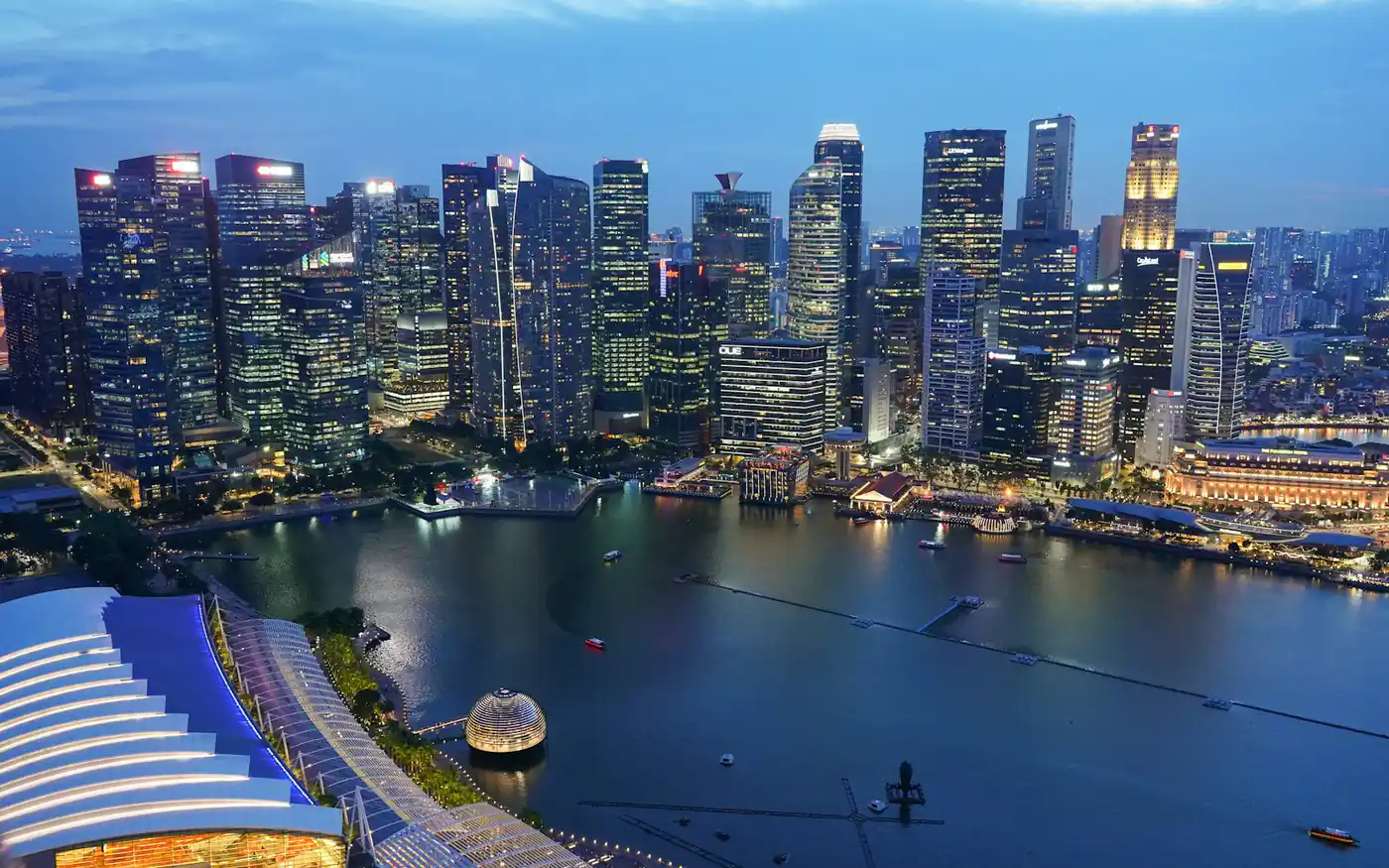
Bali is emerging; Singapore is finished. Singapore handled over USD 4 trillion in cross-border wealth (MAS, 2023) while Bali is still in regulatory build-out. Expect lower operating costs and lifestyle upside — not Singapore-level capital markets, governance depth or banking access in the medium term.
Last updated 7 August 2026
01 — Side by side
Where each hub actually stands
Six dimensions that decide where a structure gets booked. Read the Bali column as a forecast, the other two as a record.
| Dimension | Bali IFC Emerging | Singapore Established | Hong Kong Established |
|---|---|---|---|
| Fund wrapper | None yet; structuring routes via Jakarta or offshore | Variable Capital Company since 2020 | Mature fund and unit-trust regimes |
| Capital markets | Not present | Deep, institutional | Deep, plus mainland China integration |
| Treaty network | Indonesian treaties, case by case | Broad and predictable | Broad and predictable |
| Digital assets | Retail via registered futures platforms; treatment evolving | Licensed under the Payment Services Act | Mandatory VASP licensing |
| Operating cost | Materially lower | High | High |
| Real-asset access | Direct: land, resorts, marinas, fleets | Prime residential above SGD 20,000/m² | Constrained and expensive |
The realistic model is dual-hub, not either-or: Singapore or Hong Kong for fund and holding structures, Indonesia for asset-side exposure. Regulatory specifics belong with licensed law and tax firms, not with this desk.
02 — Honest read
What Bali can offer, and what it cannot
Stated plainly, because a comparison that only lists advantages is not a comparison.
Where Bali is genuinely competitive
- Lower on-the-ground cost for deal origination and private assets
- Direct proximity to real assets — land, resorts, marinas, phinisi fleets
- A physical base for founders, analysts and quant teams booked elsewhere
- New marina and liveaboard infrastructure at Benoa, Labuan Bajo and Raja Ampat
- SEZ-style tax and customs incentives, sector-dependent
Where it does not compete
- No fund wrapper equivalent to the VCC
- No investment banking franchises or deep capital markets
- No common-law style commercial dispute resolution
- Freehold restricted for foreigners; long leaseholds or indirect structures instead
- Primary digital-asset licensing still belongs in Singapore or Hong Kong
Bali cannot replace Singapore as a financial hub in the foreseeable future. It is better read as a complementary Indonesia-facing platform: lifestyle base, origination hub, and local-asset execution centre anchored to an established jurisdiction.
03 — Ground cost
What the Bali side actually costs
Bands in use as of August 2026 — indicative, and revised periodically.
Can Bali compete with Singapore as a financial hub?
Not in the foreseeable future. Singapore's banking depth, fund structures and treaty network give it a structural lead. Bali is better viewed as a complementary Indonesia-focused platform anchored to Singapore or another established jurisdiction.
What advantages could a Bali IFC offer?
SEZ-style tax and customs incentives combined with proximity to real assets — resorts, marinas, phinisi fleets and land. Lower operating and living costs, investor visa options, and concierge support for families who already hold structures in Singapore, Hong Kong or Dubai but need an Indonesia gateway.
What are the hard gaps against Hong Kong?
Deep capital markets, investment banking franchises, and common-law style dispute resolution. Hong Kong also benefits from mainland China integration. Listings, IPOs and institutional trading stay where they are.
Who would use a Bali IFC first?
Family offices, hospitality groups, yacht and marina investors, and founders already part-time in Bali. Most already operate Singapore entities and would use Bali for asset-side exposure.
What does it mean for investors today?
It changes how Indonesia exposure is sourced, not where global portfolios are booked. Strategic work still begins with licensed counsel; this desk handles orientation and field execution.
Map an Indonesia–Singapore split
Tell us what sits where today and what you are trying to add. You will get a dated answer, and a straight no where the answer is not known yet.