
Regions · Raja Ampat
Raja Ampat: scouting by liveaboard
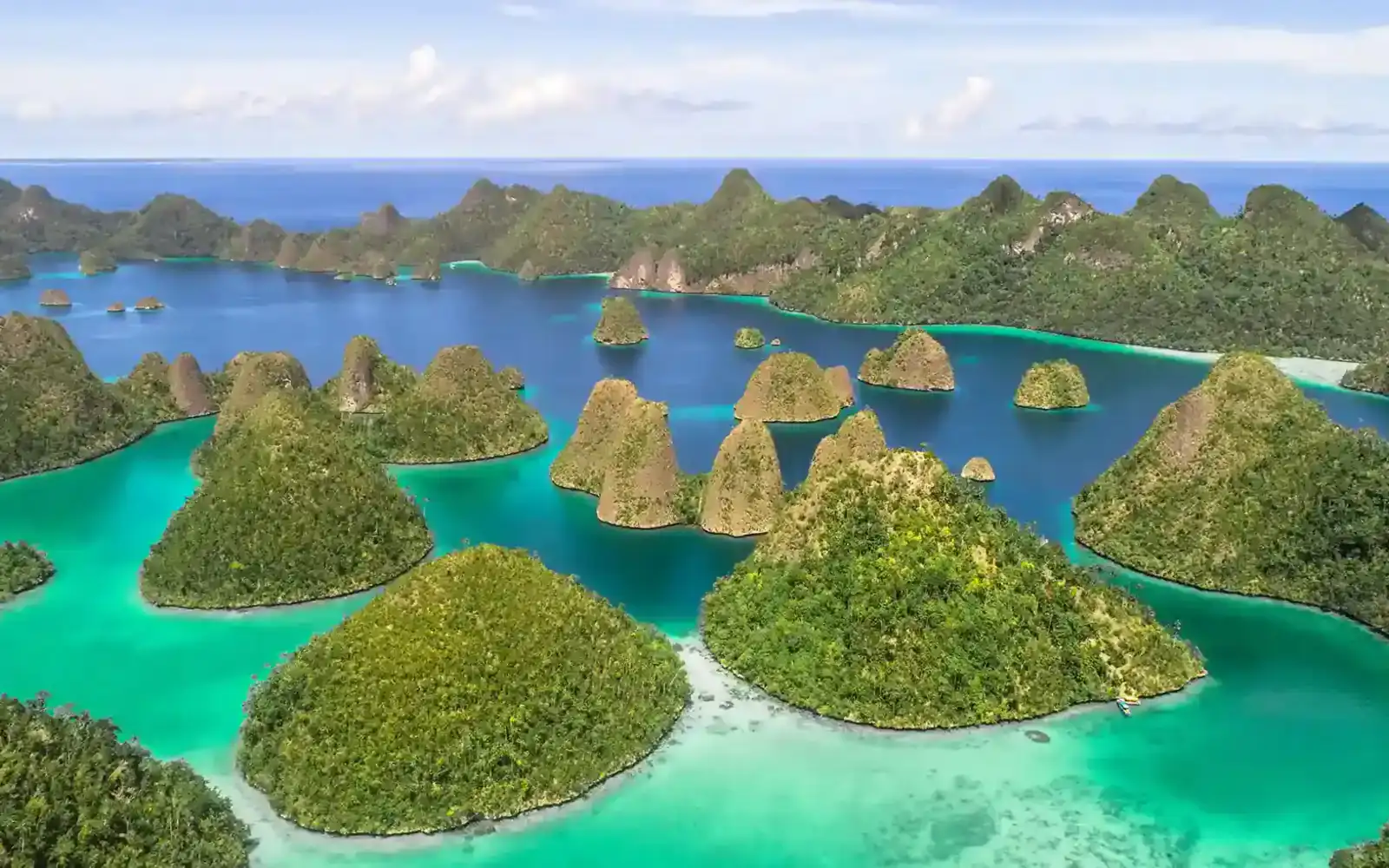
You cannot drive this one. Sites are reached from the water, judged in daylight, and eliminated by channels and swell that no listing mentions — which is why the survey is a voyage rather than a day out.
Figures dated 7 August 2026
01 — The expedition
Seven to ten days, five to seven of them useful
The gap between those two numbers is travel and weather. Anyone quoting the first without the second is selling a holiday.
-
Before departure
Consultation in Bali
Concept, capex band and whether the target is land, vessel, or a hybrid of both. The itinerary is built from that answer, not before it.
-
Transit
Bali to Sorong
Two to three hours in the air with one connection. This is the leg that makes short trips uneconomic.
-
Days 1 – 2
Board and reposition
Onto a private or semi-private liveaboard, anchoring near the first target bays so inspections start at first light rather than after a morning crossing.
-
Days 3 – 7
Shoreline inspection in daylight
Beaches, reef lines, village proximity and access routes, judged from the water and then walked. Sea conditions assessed at the hour a guest would actually arrive.
-
Throughout
The guest experience, tested directly
Living aboard is the only way to evaluate the liveaboard model honestly — you experience the product you are considering buying.
-
On return
Debrief and structure
Findings put to licensed legal, tax and company-formation partners. Nothing regulated is decided at sea.
Shorter stays miss whole island groups and the channels between them. Combined itineraries taking in Komodo, the Banda Sea or a Bali leg can extend to twelve to fourteen days. Which regions are worth combining is set out on the survey side.
02 — The choice
Eco-resort or liveaboard
The expedition exists to settle this. Four axes separate them: capital, operating complexity, community integration and environmental constraint.
Land-based eco-resort
- Eight to twenty keys is the observed viable range
- Capital is fixed in one place, and so is the risk
- Community integration is continuous and unavoidable — you are a neighbour, permanently
- Power, water and waste have to be solved on site, which is most of the build cost
- Village-linked homestay partnerships are a common structure, sharing revenue with local families or cooperatives
Liveaboard vessel
- The asset moves — Komodo in its season, Raja Ampat in its own, Banda crossings between
- Route diversification is the main defence against a bad season
- No land tenure question, and no adat negotiation
- Operating complexity is higher: crew, fuel, class inspection, safety compliance
- Depreciating asset with a maintenance obligation, not an appreciating one
Hybrid models exist — a small lodge complemented by a vessel that trades in peak months and docks for refit off-season. Build cost bands and charter economics for the vessel side are set out in the sectors silo rather than repeated here.
03 — Numbers
What scouting and building actually cost
As of August 2026. The expedition figure covers vessel, crew, diving, basic permits and in-field orientation — and excludes every regulated professional you will need afterwards.
- Scouting expedition, per person For seven to ten days, varying by vessel class. An orientation voyage, not a luxury buy-out.
- from IDR 25M
- Expedition length Of which five to seven are effective survey days.
- 7 – 10 days
- Eco-resort build, 6 – 20 keys Benchmarked from comparable Sumba projects. Remoteness, imported materials and power and water solutions drive it.
- from USD 150k
- Luxury liveaboard operating rate The revenue side of the vessel model, for context on what the capital has to earn.
- from USD 500 pp / night
- Season Raja Ampat's own window. It runs counter to Komodo, which is what makes repositioning worthwhile.
- Oct – Apr
- PT PMA minimum stated capital Orientation reference, handled by licensed advisory partners rather than by this desk.
- IDR 10 billion
Indicative and non-binding. No return is promised — for a marine asset the variables are build or acquisition cost, annual operating days, achieved charter rate and route diversification, and all four move.
04 — Limits
What the environment and the community will actually allow
On this archipelago these are not caveats attached to a plan. They are the constraint that decides whether a plan exists.
The assumption
A titled coastal parcel means it can be developed.
What applies here
Marine protected zones and conservation rules govern large parts of the archipelago, and they bind independently of whatever the certificate says. Buildability is a separate question from ownership, and it is answered before the purchase, not after.
The assumption
Community agreement is a formality to be handled at signing.
What applies here
Village and clan relationships determine whether a project operates at all. The structures that work here are partnership-shaped — revenue shared with local families or cooperatives — because the alternative is a resort nobody local has a reason to protect.
The assumption
It is a dive destination, so a dive resort works anywhere.
What applies here
Access route, channel behaviour and sea state at guest-arrival hour eliminate more candidate sites than price does. That is precisely what a liveaboard survey is for, and precisely what photographs cannot show.
The assumption
Remote means cheap to build.
What applies here
Remoteness is the cost. Imported materials, and power, water and waste solved from scratch, are what put a six-to-twenty key eco-resort in the USD 150,000 to 800,000-plus band rather than below it.
This desk provides orientation, expedition logistics and field context. Conservation permitting, company formation, tax and visas are handled by licensed partners; nothing here is regulated advice.
Can you actually build in Raja Ampat?
In places, at small scale, and subject to conservation rules and community agreement. Viable observed models are eco-resorts of roughly eight to twenty keys and village-linked partnership structures. What is permittable on a specific site is a question for licensed counsel and the relevant conservation authority, established before purchase.
Why survey by liveaboard rather than fly in?
Because the sites are reached from the water. A vessel allows full-day shoreline inspection, flexible anchoring near candidates, and real assessment of access routes and sea conditions. It also lets you experience the liveaboard product directly, which matters if that is one of the models on the table.
How long does a scouting trip need to be?
Seven to ten days for a focused expedition, of which five to seven are effective survey days. Shorter risks missing key channels and island groups entirely. Combined itineraries adding Komodo or a Banda repositioning leg run twelve to fourteen.
Which model works better here?
They fail differently rather than one being better. A resort is fixed capital with permanent community obligations and a solved-on-site infrastructure problem. A vessel moves between seasons and carries no land tenure question, but higher operating complexity and a depreciating asset. Some owners run both.
What does the trip cost cover?
Vessel, crew, diving and snorkelling, basic permits and in-field orientation, at IDR 25 to 60 million-plus per person for seven to ten days. It excludes formal legal, tax and structuring work, which is quoted separately by the licensed firms that do it.
Send the concept, get a route and a season
Tell us whether you are assessing land, a vessel, or both. You will get an expedition outline with the island groups sequenced, the season stated plainly, and the conservation questions identified before anyone books a berth.