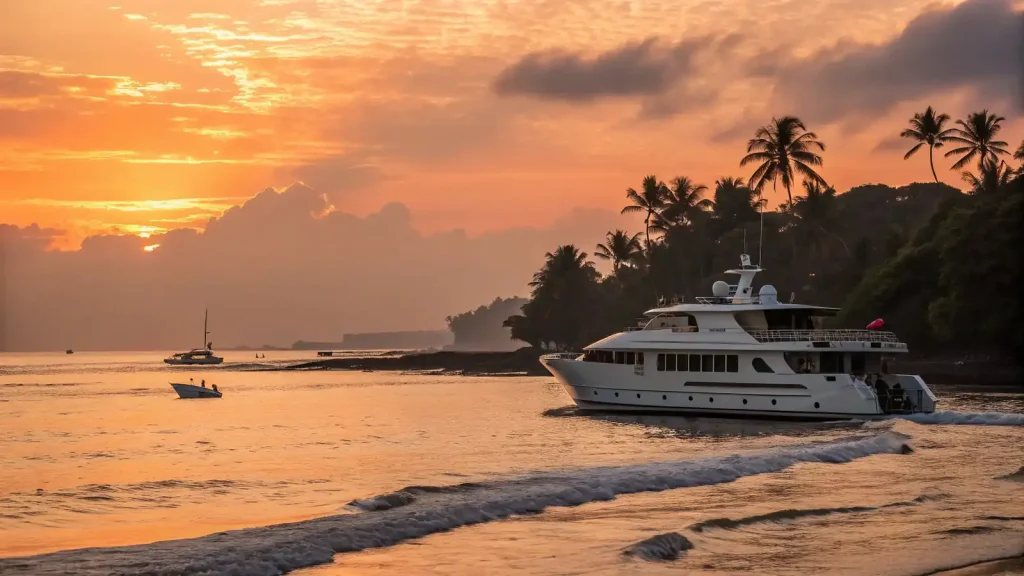
Charter Fleet Economics In 2027
For 2027-forward, realistic charter fleet ROI in Indonesia typically underwrites at 6–12% net per year on total project cost, assuming 120–180 charter days
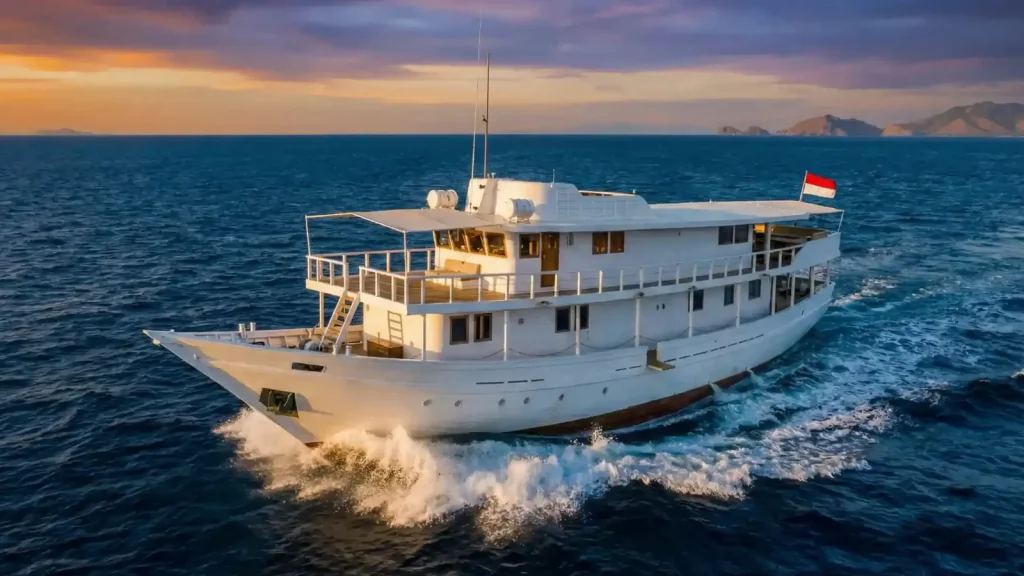
For 2027-forward, realistic charter fleet ROI in Indonesia typically underwrites at 6–12% net per year on total project cost, assuming 120–180 charter days, professional management, and correct licensing. Upside to 15%+ exists in niche phinisi charter business Indonesia ROI cases, but depends heavily on seasonality, operating discipline, and exit liquidity.
How does charter fleet ROI in 2027 compare to villas and other hospitality assets?
Investors increasingly compare bali yacht charter roi vs villa rental as waterfront land prices tighten. A properly structured yacht charter business in Bali or Komodo effectively becomes a “floating villa” that can follow demand between Bali, Lombok, Labuan Bajo, Raja Ampat and even Alor.
On the villa side, published bali hotel occupancy 2027 benchmarks suggest stabilising mid‑70% occupancy for prime areas in a normal year. Well-managed villas can reach 8–12% net yields, but face zoning changes, neighbour pressure and tightening permit enforcement.
By contrast, yacht charter investment Bali often runs on 120–180 occupied days/year, with day rates in Komodo of USD 3,500–8,000 as of August 2026 for mid to luxury phinisi. That can rival top villas on cash yield, particularly when the vessel relocates to Raja Ampat in boreal winter. However, operating costs Indonesia yacht charter business (fuel, crew, maintenance, docking, insurance) can hit 35–55% of gross turnover, higher than a typical villa’s running costs.
For portfolio construction, many 2027 mandates now blend a single flagship vessel with 1–2 land assets, then use structured bali asset management aftercare to optimise cashflow and reporting across both marine and land hospitality.
Is Bali or Lombok better for yacht charter ROI in 2027?
The Lombok vs Bali for yacht charter debate is no longer theoretical. By 2027 Bali remains the marketing and crew hub, while Lombok and Labuan Bajo host more of the actual vessel basing due to congestion and marina constraints in Benoa and Serangan.
For day charters, Bali private yacht charter price for a quality 20–25 m motor yacht typically ranges USD 3,000–7,000 per day as of August 2026, before catering and premium toys. High land-based demand from family friendly yacht charter Bali and honeymoon yacht charter Bali Indonesia segments provides a strong base, but weather windows around the Strait can be restrictive for smaller boats.
Lombok’s advantage for charter fleet ROI is lower mooring and shipyard costs, plus direct access to the Gilis and Sumbawa. Many Indonesia yacht charter investment opportunities now homeport in Labuan Bajo or Lombok, selling Bali departures as premium repositioning trips. For 2027 planning, expect Bali to remain the primary brand keyword and arrival airport, with Lombok and Komodo acting as “engine rooms” for the phinisi charter business Indonesia ROI story.
What does a 7-day Bali/Komodo charter actually cost in 2027 numbers?
For underwriting charter fleet roi 2027, investors need realistic gross revenue assumptions. As of August 2026, bali yacht charter cost for 7 days on a mid‑range 6–8 cabin phinisi in Komodo usually falls around USD 24,500–56,000, depending on season, vessel age, and inclusions. Luxury units and fully private expeditions can exceed USD 70,000/week.
In Bali, a 7‑day itinerary on a smaller but premium yacht may generate USD 21,000–49,000, with higher margin add‑ons (toys, videography, private chef, executive protection). These numbers are informed by Komodo Luxury’s management portfolio of 240+ vessels across Indonesia since 2015 and typical liveaboard boat Indonesia business ROI case studies.
Key revenue drivers in 2027 are group yacht charter Bali 12 passengers configurations (efficient per‑cabin pricing), flexible routing (Bali–Lombok–Komodo–Flores), and shifting to Raja Ampat in October–April, when per‑night rates often rise 15–30% due to limited capacity. Deep off‑season discounting can damage brand positioning, so most investors now plan around 120–150 strong days rather than chasing 200+ shallow‑discount days.
How does Indonesia licensing and SEZ policy affect foreign charter investors?
For yacht charter business Indonesia for foreign investors, 2027 is defined by regulatory tightening rather than loosening. Bali is part of broader Special Economic Zone (SEZ/KEK) narratives, but as of August 2026 there is no single “Bali IFC” law that automatically grants a bali yacht charter business license in sez; approvals still route through sectoral ministries and port authorities.
Indonesia yacht charter license for foreigners normally requires a PT PMA structure, proper flagging/classing, and local crewing ratios. How to register yacht charter company in Bali is therefore less about one form and more about sequencing: corporate setup, maritime survey/class, port clearances, tax registration, and operating permits. Our desk is independent of government and Bali IFC authorities and only coordinates licensed legal and tax partners for this work.
Indonesia maritime insurance requirements for charter boats remain strict around passenger capacity, zones of operation, and dive activities. Policies often require class society certificates (e.g. BKI with optional Lloyd’s/RINA/ABS) and updated safety gear audits. Many assets described in the phinisi build 2027 pipeline on our phinisi build 2027 guide are now designed around these insurance and foreign-ownership constraints.
How do you actually structure a phinisi or liveaboard for ROI instead of headaches?
Successful charters in 2027 use an end‑to‑end approach: design, construction, brand, management, then exit. For newbuilds, typical budgets from Boat Construction Indonesia as of August 2026 range from USD 250,000–500,000 for a mid 20–30 m unit, USD 500,000–1,000,000+ for 25–40 m luxury, and USD 1–3M+ for 40–55 m superyacht, with 10–36 month timelines.
From an ROI lens, liveaboard boat Indonesia business ROI improves when cabins and crew ratios are optimised for popular segments: family friendly yacht charter Bali, honeymoon itineraries, and dive‑oriented routes in Komodo, Raja Ampat and Banda. Over‑building communal spaces or under‑specifying air‑conditioning and stabilisation can suppress rates by 20–30% for the life of the vessel.
For investors entering the yacht charter business Bali via acquisition instead of construction, careful technical survey, brand audit, and future‑route planning (Komodo, Raja Ampat, Banda Sea) matter more than cosmetic upgrades. A vessel that can easily switch among group yacht charter Bali 12 passengers, dive expeditions, and incentive trips usually commands stronger resale values.
- Typical PT PMA minimum capital for Indonesia marine-tourism projects: IDR 10 billion (as of August 2026, subject to policy changes).
- Standard Komodo National Park daily fees for foreign divers: about IDR 300,000–400,000 per diver per day (as of August 2026), depending on itinerary bundling.
- Typical Indonesia liveaboard pricing bands (as of August 2026): budget USD 150–250/night, midrange USD 250–500/night, luxury USD 500–1,000+/night.
- Dry season in Komodo/Labuan Bajo (often best for charters): roughly April–November, with calmer seas and better visibility.
- Peak Raja Ampat charter window: generally October–April, coinciding with many luxury liveaboards re‑positioning from Komodo.
- Average DPS–LBJ (Bali–Labuan Bajo) flight time: about 1–1.25 hours direct, supporting same‑day yacht embarkation.
- Typical villa+car+tour bundles in Bali survey trips: from around USD 500/day as of August 2026, used for on‑land asset inspections.
Frequently asked questions
Charter Fleet Economics In 2027?
By 2027, well-structured charter fleets in Indonesia typically model 6–12% net annual ROI on total project cost, assuming 120–180 charter days, strong online distribution, and disciplined maintenance. Upside depends on vessel class, routing between Bali, Komodo and Raja Ampat, and financing terms. These are orientation ranges only; licensed advisors must validate for each client.
When is the best time for Bali yacht charter to optimise ROI and guest satisfaction?
Historically, the best time for Bali yacht charter has been the drier, calmer period from roughly April to October, with July–September popular for families. Shoulder months can generate higher ROI per guest through flexible pricing and lower operating stress. Many fleets reposition to Komodo mid‑year, then to Raja Ampat from October–April to smooth overall utilisation.
How should investors compare Bali vs Phuket yacht charter in 2027?
Bali vs Phuket yacht charter comparison in 2027 centres on maturity and differentiation. Phuket offers denser marina infrastructure and established broker networks. Indonesia offers more exploratory routes (Komodo, Raja Ampat, Banda Sea) with less direct competition but higher regulatory complexity. For some portfolios, a Bali-based phinisi paired with a Thai motor yacht diversifies currency, route and seasonality exposure.
Can foreigners own and operate a yacht charter business in Bali legally?
Bali yacht charter business for foreigners is typically structured via a PT PMA with proper marine and tourism licensing. Foreign investors normally cannot operate informally under local nominees without risk. Indonesia yacht charter license for foreigners, crewing rules, and tax treatment must be handled by licensed legal and tax consultants; our bali investor concierge desk coordinates those specialists.
What are realistic operating costs for a 30–40 m phinisi in Indonesia?
For 2027 planning, operating costs Indonesia yacht charter business for a 30–40 m phinisi generally land around 35–55% of gross revenue. Major line items include fuel on long Komodo/Raja routes, 10–20+ crew salaries, maintenance and haul‑outs, marine insurance, park fees, and brokerage commissions. Efficient routing, preventive maintenance, and strong direct-booking channels materially improve margins.
How long does it take to set up a yacht charter company and vessel in Bali?
How to register yacht charter company in Bali in practice means sequencing PT PMA incorporation, licenses, and vessel readiness. For a new corporate structure and imported or newly built vessel, 9–18 months is a common real-world window. Buying an already-licensed operating asset can compress this to 3–9 months, subject to due diligence and any refit work.
For 2027–2028 charter fleet planning across Bali, Lombok, Labuan Bajo, Sumba and Raja Ampat, contact the BD desk of Juara Holding Group via WhatsApp 6281128590000 or sales@balipremiumtrip.com for structured orientation and introductions to licensed legal, tax and technical partners.
Last updated 7 August 2026