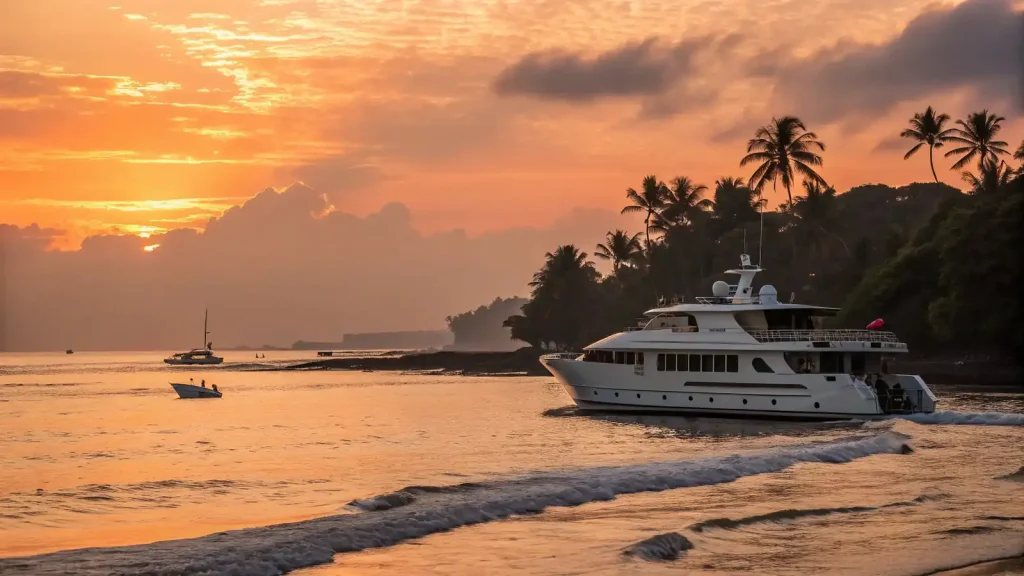
Phinisi Build Slots & Costs 2027
For a serious phinisi build 2027 plan, expect USD 500,000–1,500,000 as of August 2026 for a classed 30–40 m custom phinisi liveaboard in Indonesia, dependi

For a serious phinisi build 2027 plan, expect USD 500,000–1,500,000 as of August 2026 for a classed 30–40 m custom phinisi liveaboard in Indonesia, depending on finish level and capacity. Lead yards report 10–18 month build slots, with prime 2027 delivery windows already being reserved on a first‑come basis.
What does a realistic phinisi build 2027 budget look like?
As of August 2026, verified Indonesia yard ranges for custom phinisi construction are:
Basic wooden phinisi (20–25 m, simple fit‑out) from about USD 100,000–250,000; mid‑segment 20–30 m charter-ready vessels around USD 250,000–500,000; luxury 25–40 m builds in the USD 500,000–1,000,000+ band; and superyacht‑scale 40–55 m projects from roughly USD 1–3 million+. These figures come from established Sulawesi and Flores yards working through Boat Construction Indonesia.
The “how much does a phinisi liveaboard cost to build” question in 2027 is mostly answered by three variables: steel versus full‑wood structure, classification (BKI only, or BKI plus Lloyd’s/RINA/ABS), and the phinisi yacht interior design for liveaboard purposes (cabins, spa, dive deck, toys). Charter‑grade interiors can easily represent 25–40% of the total build. For investors timing a 2027 delivery, budgeting in the USD 750,000–1,500,000 range generally aligns with a 30–40 m, 6–10 cabin, warm‑water expedition platform suitable for Komodo and Raja Ampat.
Which build slots are realistically available for 2027 delivery?
By August 2026, reputable phinisi yards in Bulukumba (South Sulawesi) and Labuan Bajo (Flores) typically have their larger 40 m+ keels committed 14–24 months out. For 2027, that means investors are now selecting from mid‑size 25–35 m slots, or negotiating late‑2027/2028 for larger hulls. Build durations published by Boat Construction Indonesia range from 10 months for smaller basic units to 36 months for 50 m+ superyacht projects.
For a custom phinisi build for charter Indonesia with class certification and Western‑standard MEP (mechanical, electrical, plumbing), the practical construction window is 14–20 months, including dry‑docking, sea trials, and interior commissioning. Investors targeting phinisi liveaboard Indonesia Komodo operations for April–November 2028 may therefore still secure a 2027 launch/commissioning slot as of August 2026, but with compressed design decision timelines. Coordination through a Bali‑based advisor to coordinate Indonesia‑wide investments can smooth site visits, yard comparisons, and contract negotiation from a single hub.
What are the ongoing phinisi liveaboard operating costs in Indonesia?
Phinisi liveaboard operating costs Indonesia-wide sit in several predictable buckets: crew, fuel, port and park fees, insurance, and wooden phinisi maintenance cost Indonesia standards (haul‑outs, caulking, paint, systems). As of August 2026, multi‑destination charter vessels in the 30–40 m range typically carry 8–16 crew, with total salary and social costs varying widely by itinerary and standard.
Fuel and logistics depend strongly on the best phinisi liveaboard routes for investment. A Komodo‑only itinerary (April–November) with short daily transits has very different burn rates than Raja Ampat seasons (October–April) or Banda Sea crossings. Komodo National Park fees for foreign divers are around IDR 300,000–400,000 per diver per day as of 2026, with exact totals depending on route packaging and conservation surcharges. Crew and operational costs for liveaboard Indonesia can be meaningfully reduced via professional management, but owners should still model for hull maintenance every year and major refits every 4–6 years, especially for high‑usage charter vessels.
How does charter revenue potential compare with build and running costs?
For context, Bali phinisi liveaboard price per night in 2026 ranges broadly from about USD 150–250/night (budget), USD 250–500/night (mid‑range), to USD 500–1,000+ per night for luxury vessels, based on publicly advertised rates. Flagship private charters in Komodo via the JHG network are marketed around USD 3,500–8,000 per day, with an ultra‑luxury top end near USD 27,000 per night.
This positioning frames bali phinisi yacht investment opportunities versus capital expenditure. Higher‑end vessels with strong branding, media, and route curation (for example, alternating phinisi liveaboard Indonesia Komodo dry‑season operations with Raja Ampat or Banda Sea crossings) can command higher yields, but returns depend on occupancy, seasonality, and market positioning. Advisors on this desk never promise ROI; liveaboard investment Indonesia is sensitive to global travel sentiment, local regulations, and competition. For investors benchmarking, comparing “how much does it cost to build a resort in Bali” or “how much does it cost to build a hotel in Bali” against a USD 1–2 million mobile marine asset is a useful capital‑allocation exercise rather than a direct apples‑to‑apples comparison.
What structures, regulations, and ownership paths exist for foreigners?
Bali phinisi investment inevitably touches on structuring. Owning a phinisi yacht in Indonesia as foreigner is usually organised via a foreign‑investment company (PT PMA) with minimum stated capital of IDR 10 billion, as published on the Labuan Bajo advisory rail. The vessel can then be locally flagged and entered into charter operations under phinisi liveaboard business Indonesia regulations, alongside crewing and safety requirements.
As an independent desk, not affiliated with any government or KEK authority, this article provides orientation only; formal legal and tax work must be handled by licensed Indonesian counsel and tax advisors. Some investors coordinate residency or the indonesia golden visa 2027 options via specialist partners. Others combine marine assets with land banking, using comparative data such as Bali land price per are and lower‑cost frontier destinations (Sumba, Labuan Bajo, Raja Ampat) for diversification. Questions like “can foreigners open offshore bank account from Bali” sit within private wealth management Bali for expats conversations; this desk connects to regulated offshore, onshore, and banking partners rather than giving advice directly.
How can financing, logistics, and on‑the‑ground support be organised from Bali?
How to finance phinisi liveaboard purchase in Indonesia depends on the investor’s banking relationships. Indonesian banks seldom provide standard yacht mortgages to non‑resident foreigners; most projects are funded with equity, offshore lending, or family‑office capital. This is where bali phinisi investment opportunities are sometimes paired with broader portfolio planning through licensed private wealth managers who understand tourism and marine assets.
From an operational standpoint, Bali remains the preferred control centre. Direct flights to Labuan Bajo and Makassar, combined with services like executive private driver Bali and VIP airport support, allow investors to visit yards, inspect builds, and host charter‑broker fam trips with minimal friction. For corporate users combining a vessel with on‑shore experiences, a dedicated corporate retreat Bali finance and planning channel can coordinate cash‑flow modelling between land and sea assets, from beach club investment 2027 concepts to multi‑day liveaboard expeditions used as incentive travel or deal‑making environments.
- Typical build timelines (as of August 2026): 10–18 months for 20–35 m, 18–36 months for 40–55 m phinisi projects, depending on class and interior complexity.
- Class options: BKI baseline classification with the possibility to add international notations such as Lloyd’s, RINA, or ABS on selected projects.
- Key documents at handover: build contract, class and survey certificates, tonnage certificate, Indonesian flagging/registration papers, and insurance binders.
- Standard 30–40 m layouts: 6–10 guest cabins, 8–16 crew, separate dive deck, galley, and technical spaces, optimised for Komodo and Raja Ampat itineraries.
- Annual maintenance planning: at least one haul‑out, anti‑fouling, and underwater works; a 4–6 year horizon for major refits, structural checks, and interior refreshes.
- Site visit logistics: typically a 1–1.25 hour Bali–Labuan Bajo flight plus vehicle or tender transfer; survey trips often combined with 3–5 day private charter.
- Advisory scope: orientation on routes, yards, and operating models, with referrals to licensed legal, tax, banking, and technical survey partners across Indonesia.
Frequently asked questions
Phinisi Build Slots & Costs 2027?
As of August 2026, serious 2027 phinisi build slots for 30–40 m charter‑grade vessels are pricing in the USD 500,000–1,500,000 range, with construction windows of roughly 14–20 months. Larger 40 m+ hulls are typically booking into late‑2027 or 2028. Availability varies by yard, classification, and interior standard.
Are Bali phinisi investment opportunities still attractive after 2027?
Bali phinisi investment remains driven by demand for high‑end liveaboards in Komodo, Raja Ampat, and beyond. Profitability depends on vessel positioning, occupancy, and regulation stability. Investors increasingly see phinisi assets as part of broader portfolios that may also include resorts, villas, or beach clubs, rather than a stand‑alone speculative play.
What are the best phinisi liveaboard routes for investment focus?
Commercially, Komodo (April–November) and Raja Ampat (October–April) remain the strongest back‑to‑back combination, often supplemented by limited‑window Banda Sea or Alor crossings. Route design affects fuel, crew, and park‑fee costs, but also price power and demand. Each investor’s “best” route mix depends on target markets and charter strategy.
How does phinisi liveaboard business Indonesia regulation affect foreigners?
Foreign investors usually structure ownership via a PT PMA, with local flagging and compliance under Indonesian maritime, labour, and tourism rules. Regulations impact crewing, safety equipment, route permissions, and tax treatment. This desk only provides orientation and introductions; detailed structuring must be handled by licensed Indonesian legal and tax professionals.
Can phinisi investment be combined with other Indonesia assets?
Yes. Some investors pair a liveaboard with landbanking near Labuan Bajo, resort concepts in Sumba/Raja Ampat, or Bali‑based villas. Comparing bali land price per are and resort build costs with a mobile phinisi asset helps shape allocation. Coordinated planning through a single desk reduces friction between marine investments and on‑shore hospitality or real estate.
For a 2027–2029 phinisi build, refit, or liveaboard investment Indonesia briefing, contact the BD desk of Juara Holding Group via WhatsApp 6281128590000 or email sales@balipremiumtrip.com.
Last updated 7 August 2026