
Bali Villa Market Outlook 2027
The bali villa market 2027 is expected to be defined by constrained prime land, a shift to professionally managed inventory, and deeper integration with ma
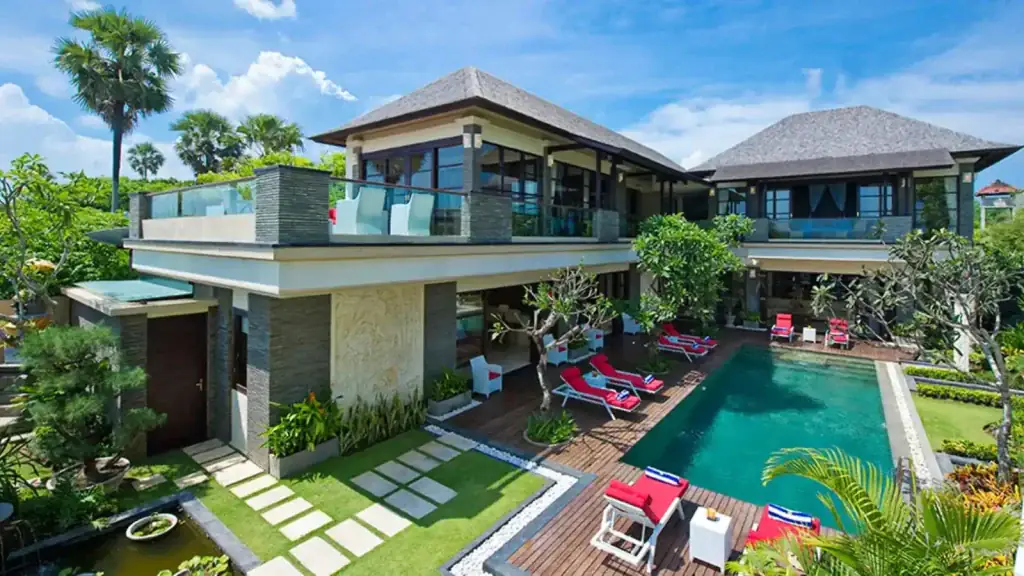
The bali villa market 2027 is expected to be defined by constrained prime land, a shift to professionally managed inventory, and deeper integration with marine tourism. Forecasts discussed with local brokers suggest headline gross yields of 7–12% range for well-located villas, but performance will depend heavily on area, management quality, seasonality and regulatory compliance.
How does the Bali villa market 2027 sit inside the wider Bali property and hotel outlook?
The bali villa market 2027 cannot be read in isolation from the broader bali hotel market outlook and bali resort market outlook. By 2026, Bali had already surpassed pre‑2020 international arrivals, and domestic tourism remained strong, supporting both hotel ADRs and villa occupancy. Pipeline resort projects in South Bali, Ubud and North Bali are pushing land prices upward, especially close to main arterials.
For investors, the bali property market outlook 2026 showed two clear patterns: limited new freehold stock in mature coastal areas and a pivot of new development corridors toward North Canggu, Pererenan, Seseh and parts of Bukit. As of August 2026, market observers were already projecting that bali property market outlook 2027 would be defined more by quality of product than sheer volume of new builds, with regulation and licensing enforcement slowly tightening.
This shift supports villas that operate more like small hotels, with compliant tourism licenses, professional operators and clear tax reporting managed via Indonesian entities. The bali property market forecast for foreign investors therefore points toward a more institutional, documentation-heavy environment, where working with established local partners and licensed advisors becomes central rather than optional.
Which are the best areas in Bali for villa investment by 2027?
Investors often ask where the best areas in bali for villa investment will be around 2027. Based on 2024–2026 transaction flows, three clusters stand out: South Bali (Canggu–Berawa–Pererenan), the Bukit Peninsula (Uluwatu–Bingin–Balangan), and Ubud outskirts. Each reacts differently to bali property market seasonality and tourism mix.
In Denpasar and surrounding South Bali sub‑districts, demand for denpasar south bali villa investment for expats has grown, especially for primary or semi‑primary residences with good international school access. As of August 2026, brokers were reporting rising long‑term lease rates in these neighborhoods, contrasting with more purely nightly-rental zones such as central Canggu.
Bukit locations exposed to the “beach club corridor” show strong short-stay demand but face operational competition; investors in these zones should study the beach club investment 2027 dynamics carefully. Meanwhile, Ubud’s surrounding rice-field belt continues to attract wellness tourism and longer-stay digital nomads, though infrastructure and access times must be factored into pricing and yield expectations.
By 2027, high-conviction investors are expected to focus on micro-locations: walkability to the beach, distance to main roads, noise patterns and licensing feasibility often matter as much as the sub‑district name on the marketing brochure.
How should foreigners think about villa investment in Bali by 2027?
Rules for villa investment in bali for foreigners are expected to remain based on indirect ownership structures, typically via an Indonesian entity (PT PMA) and land-use rights, not direct foreign freehold. Current frameworks may evolve, and serious investors should always coordinate with licensed legal and tax counsel before committing capital.
From 2024 to August 2026, interest in bali beachfront villa investment for expats remained strong, but available beachfront plots became scarcer and higher-priced, pushing many to consider near-beach or riverfront instead. Those seeking a blend of residence and investment increasingly look at bali villa investment that can legally operate under tourism licensing, often paired with residency strategies that intersect with the evolving indonesia golden visa 2027 discussion.
Investors must also watch bali property market timing. Buying land or off-plan during infrastructure upgrades or ahead of new hospitality openings can be advantageous, but it raises execution and delivery risk. Many 2027‑oriented buyers therefore use a bali investment concierge villa and land scouting service to identify plots with clear zoning, utility access and realistic build timelines, rather than chasing purely speculative price appreciation.
This platform, operated by Juara Holding Group since 2015, is an independent information hub and not affiliated with any government or Bali IFC authority; anything touching legal structuring is coordinated via licensed partners only.
How does Bali compare with Lombok and Sumba for villa strategies beyond 2027?
Strategic investors rarely look only at Bali. The bali vs lombok villa investment discussion has sharpened since new infrastructure announcements and resort brands began appearing on Lombok’s south coast. Land there typically prices below comparable Bali locations, but liquidity is thinner and absorption may be slower, which affects exit strategies.
Sumba has attracted early‑stage capital due to much lower land prices. Publicly listed offers from specialist brokers show beach‑adjacent plots from IDR 43,750–625,000/m² as of August 2026, which shapes the economics of sumba villa investment. However, access, power, water and human capital constraints are real; investors often stage developments in phases and allow a longer ramp‑up period for occupancy.
Many 2027‑oriented buyers now combine a mature Bali position with an earlier‑stage Lombok or Sumba allocation, using a sumba villa investment tour from bali or a Lombok scouting trip to understand ground realities. This type of portfolio view fits with a broader bali property market forecast strategy: secure income-generating assets in Bali, while treating frontier islands as longer-duration, higher-volatility exposure.
Regional comparisons also extend west to the labuan bajo 2027 narrative, where marine tourism, phinisi fleets and boutique waterfront villas intersect, providing another diversification axis beyond pure Bali land banking.
What new combined villa, cruise and yacht angles are emerging by 2027?
By 2027, more investors are blending land and marine tourism. Operators with Komodo and Raja Ampat exposure report rising interest in liveaboard vs villa investment bali conversations, where capital allocates partly to a boat and partly to a villa or small resort, with each feeding the other’s demand.
Through Komodo Luxury’s 240+ vessel network, bali phinisi and villa co-investment schemes have appeared in various bespoke forms: a syndicate might build or acquire a phinisi (with construction ranges from USD 100,000–3,000,000+ as of August 2026 depending on size and finish) while simultaneously securing a Bali or Labuan Bajo villa base for pre/post-cruise guests. This underpins concepts like a bali cruise and villa investment package tailored to specific source markets.
For higher‑net‑worth profiles, combining yacht and villa portfolio in indonesia has become a planning theme. Some families consider one vessel working Komodo–Raja Ampat seasons, anchored by a limited number of villas across Bali, Labuan Bajo and Sumba. These hybrid allocations are operationally complex and require strong management, but they align with guests’ preference for integrated experiences rather than standalone assets.
Such structures are highly bespoke; orientation can be provided, but financial projections and tax implications must be modelled by licensed advisers familiar with both hospitality and maritime regulations.
How can investors physically test the market before committing in 2027?
By 2027, serious buyers increasingly insist on walking plots and sleeping in comparable villas before wiring deposits. A structured bali villa investment tour allows investors to combine market education, lifestyle testing and initial due diligence. Typical three‑to‑five‑day programs layer chauffeured site runs with stays in staffed villas, giving a realistic view of operations, staffing and guest flow.
Those targeting coastal returns often extend this into a bali beachfront villa investment tour, comparing sub‑markets like Pererenan, Seseh and Bukit peninsular pockets, then flying onward to explore Labuan Bajo or Sumba before making a decision. Survey trips can also be integrated with private yacht charters (USD 3,500–8,000/day in Komodo as of August 2026) to inspect marine-accessible sites.
Some investors add a liveaboard leg to understand how a bali villa investment could complement boat itineraries, particularly if considering future co‑investment in a vessel. A structured bali investment survey trip typically includes scheduled meetings with legal, tax and architectural partners, plus time for off‑the‑record conversations with existing owners about real operating conditions.
- Indicative villa+car+tour bundles for survey stays start around USD 500/day as of August 2026, depending on villa class and season.
- Komodo National Park day-use fees for foreign divers typically range IDR 300,000–400,000 per diver per day as of August 2026, depending on route packaging.
- Domestic flight time Denpasar–Labuan Bajo averages 1–1.25 hours; schedules vary by airline and season.
- Basic 20–25 m phinisi construction budgets run roughly USD 100,000–250,000 as of August 2026, with timelines from 10–18 months.
- Mid‑range 25–40 m yacht builds range around USD 500,000–1,000,000+ with 18–30 month build horizons as of August 2026.
- Sumba beachfront plots listed by specialist brokers range from IDR 43,750–625,000/m² as of August 2026, typically sold in multi‑hectare blocks.
- Private chauffeured touring in Bali for site inspections starts around USD 250/day for a premium vehicle and English‑speaking driver as of August 2026.
Frequently asked questions
Bali Villa Market Outlook 2027?
The bali villa market 2027 is expected to show moderate capital growth and stable to rising occupancies in prime zones, framed by tighter regulation and scarcer quality land. Gross yield expectations of 7–12% are frequently cited but are highly dependent on micro‑location, licensing, management and bali property market seasonality patterns.
How reliable is the Bali property market forecast for foreign investors?
Any bali property market forecast for foreign investors is indicative only. Tourism depends on global macro conditions and airlift, while regulations on foreign participation can evolve. Forecasts are most useful for comparing sub‑markets, not for predicting exact returns. Foreigners should treat reports as orientation and rely on licensed advisors for transaction‑specific legal and tax guidance.
Is a Bali beachfront villa investment for expats still viable by 2027?
Bali beachfront villa investment for expats is structurally constrained by limited coastline and rising land values, so entry tickets are higher and deals require more careful underwriting. Viability increasingly rests on licensing clarity, environmental resilience, and the ability to generate diversified income (short‑term rental, retreats, events) rather than relying solely on nightly guests.
How does a Bali cruise and villa investment package work in practice?
A bali cruise and villa investment package typically links a villa or small resort with access to a managed yacht or phinisi. Guests might start in a Bali villa, then transfer to a Komodo or Raja Ampat liveaboard before returning ashore. Investors share revenue from both assets, but structures vary widely and require careful legal and operational design.
Is Sumba villa investment better than staying fully in Bali?
Sumba villa investment offers much lower land entry costs but higher development friction and longer absorption times. Bali provides deeper tourism demand, stronger infrastructure and better liquidity. Many investors do not frame it as “better” or “worse”; they hold income-focused assets in Bali and treat Sumba as a longer‑term, higher‑volatility satellite allocation.
To structure a tailored 2027–2030 villa and marine‑tourism scouting program, contact the BD desk at WhatsApp 6281128590000 or email sales@balipremiumtrip.com for coordinated orientation with licensed professional partners.
Last updated 7 August 2026