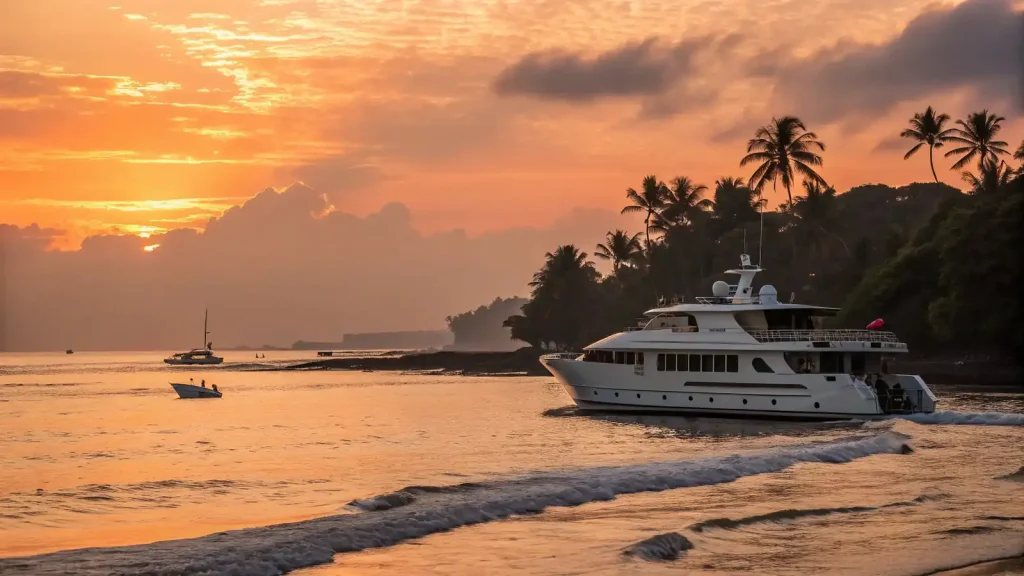
Invest In Bali: 2027 Trend Lines
Bali’s international financial center is expected to anchor at least USD 5–10 billion in structured investment flows by 2030, driven by hospitality, marine

Bali’s international financial center is expected to anchor at least USD 5–10 billion in structured investment flows by 2030, driven by hospitality, marine tourism and regional family office relocation. For investors asking how to “invest Bali 2027”, the practical focus remains: clear structuring in Bali, and diversified exposure across Bali, Lombok, Sumba, Labuan Bajo and Raja Ampat.
Is Bali a good place to invest in 2027, or is the peak already behind us?
For many investors the first question is simple: is Bali a good place to invest in 2027, or has the curve crested? The current answer is that the island is shifting from speculative land play into structured, service-led investment—especially hospitality, marine tourism and professional services clustered around the emerging international financial center.
Bali’s visitor growth since the 2010s has not been linear, but three facts matter for 2027-forward thinking. First, the island has grown a full ecosystem: charter fleets, premium villas, medical concierge and family office liaison desks all now exist locally. Second, marine corridors to Labuan Bajo, Sumba and Raja Ampat are increasingly integrated, with private yacht charter in Komodo regularly priced at USD 3,500–8,000 per day as of August 2026, signalling strong high-yield demand.
Third, investor infrastructure has matured. Investor KITAS, Second Home arrangements and PT PMA structures are now standardised paths handled by specialist partners. The question “is Bali a good place to invest in 2026 or 2027?” therefore becomes less about timing the tourist cycle, and more about building compliant, professionally managed structures with regional diversification beyond Bali alone.
How to invest in Bali International Financial Center and still stay independent?
Many inquiries in 2026–2027 centre on how to invest in Bali International Financial Center (IFC) while remaining operationally independent. At the time of writing, the official IFC/KEK roadmap is still evolving and core milestones beyond 2026 have not all been formally published. Juara Holding Group is not affiliated with any government IFC authority; the role here is investor orientation, then connection to licensed advisors.
Practically, investors asking how to invest in Bali IFC have three tracks. First, a legal-structuring track through PT PMA and residency arrangements, typically with minimum stated capital in Indonesia of IDR 10 billion for a foreign-owned PT PMA as of August 2026. Second, an operational base: serviced offices, villas or branded residences integrated with family office liaison support.
Third, sector allocation: hospitality, vessel ownership, or land banking in growth corridors. For example, those wanting hospitality exposure may invest in hotel land in Bali or participate in managed villas, guided by data from channels tracking bali hotel occupancy 2027. Independent platforms like Bali International Financial Center Desk coordinate planning and introductions but leave regulatory approvals, tax and licensing strictly to regulated partners.
Where to invest in Bali property in 2027, and how much does it cost?
Deciding where to invest in Bali property in 2027 usually starts with clarifying strategy: yield from operating assets, or long-term appreciation. The best areas to invest in Bali are no longer only Canggu and Seminyak. There is visible movement toward Pererenan, Tabanan’s coastal strips, and North Bali for those seeking lower land entry prices.
The cost to invest in Bali varies widely. As of August 2026, well-located resort land in comparable destinations such as Labuan Bajo ranges from IDR 1,950,000 to 9,100,000 per square meter, while Sumba beachfront can run from IDR 43,750 to 625,000 per square meter. Bali’s prime coastal and main-road prices commonly exceed these, with precise numbers only available via live listings.
For investors asking how much does it cost to invest in Bali property, indicative entry points range from a few hundred thousand US dollars for a small leasehold villa, up to multi-million-dollar allocations in branded hospitality or multi-hectare land for future development. The bali villa market 2027 data set helps benchmark nightly rates and occupancy, which then feeds into underwriting assumptions used by licensed valuers and financiers.
How to invest in Bali as a foreigner and stay compliant in 2027?
The most frequent question remains: can foreigners invest in Bali, and how to invest in Bali as a foreigner without missteps? Yes, foreigners can invest in Bali, but direct freehold land ownership is restricted. The typical route is to use a foreign-owned PT PMA and/or long-term leasehold or usage rights under Indonesian law, structured by licensed legal and tax professionals.
A common pathway in 2026–2027 involves a PT PMA with minimum capital of IDR 10 billion, alongside an Investor KITAS or other residency solution arranged via specialist visa desks. From Bali, this structure then becomes a hub for how to invest in Indonesia as a foreigner from Bali, accessing opportunities in Lombok, Sumba, Labuan Bajo and Raja Ampat with one corporate and banking backbone.
Orientation desks like Bali International Financial Center Desk map the journey—company formation, bank account opening, site-survey logistics, and handover to regulated advisors. Complex questions on profit repatriation, tax optimisation and treaty use are deliberately passed to licensed tax and legal partners so that investors stay on the right side of fast-evolving regulations.
What are the real opportunities beyond Bali: Lombok, Sumba, Labuan Bajo and Raja Ampat?
Any 2027-forward strategy that only asks where to invest in Bali risks missing the larger Indonesia marine arc. Questions about the best season to invest in Indonesia marine tourism, or how to invest in a hotel in Bali, increasingly come bundled with interest to invest in Lombok, invest in Sumba, or acquire a liveaboard vessel for Komodo and Raja Ampat.
Lombok and the Gili islands benefit from proximity to Bali with comparatively lower land entry costs and improving infrastructure. Sumba offers large land banks at a fraction of Bali prices, with verified listings as low as IDR 43,750 per square meter as of August 2026 for very large tracts. Labuan Bajo, the Komodo gateway, shows resort land prices up to IDR 9,100,000 per square meter near flagship properties.
Raja Ampat, managed under strict marine-protected-area rules, is more constrained. Here, the opportunity is typically advisory-led: eco-resort, marina or private-island concepts that respect adat tenure and conservation. For marine tourism hardware, investors explore phinisi build 2027 options, with custom wooden yachts ranging from USD 100,000 to USD 1 million+ as of August 2026, and operating as charter assets in Komodo and Raja Ampat seasons.
When is the best time to invest in Bali hospitality and marine tourism?
Timing questions are constant: best time to invest in Bali, best season to invest in Indonesia marine tourism, and when to invest in Bali property versus vessels. Two calendars matter: regulatory and seasonal. Regulatory windows include changes to visa categories, capital thresholds and zoning rules; these should always be tracked with licensed local counsel.
Seasonally, the best time to invest in Bali hospitality from an operational perspective aligns with demand arcs readable via data such as bali hotel occupancy 2027. Bali and Lombok see stronger occupancy in the April–November dry season, while Komodo liveaboards typically peak in the same window with charter rates of USD 3,500–8,000 per day as of August 2026.
Raja Ampat liveaboards often favour October–April. For investors structuring marine portfolios across both, this creates a near year-round revenue mix. As for property acquisition, the best time to invest in Bali property is usually dictated by individual liquidity and regulatory clarity, not only market cycles. Carefully planned 2027 acquisition with 2028–2030 operation is a common horizon.
- Foreign-owned PT PMA companies typically require minimum stated capital of IDR 10 billion as of August 2026.
- Komodo private yacht charter survey trips range from about USD 3,500–8,000 per day as of August 2026.
- Sumba land listings span roughly IDR 43,750–625,000 per square meter as of August 2026, depending on size and beachfront status.
- Labuan Bajo resort-area land can reach around IDR 9,100,000 per square meter near established five-star properties as of August 2026.
- Custom phinisi builds for marine tourism typically cost from USD 100,000 to over USD 1 million, with build times from 10–36 months.
- Private chauffeured ground surveys in Bali are often budgeted from about USD 250 per day as of August 2026 for premium vehicles.
- VIP airport fast-track services at Bali’s Ngurah Rai Airport are commonly budgeted from around USD 160 per person as of August 2026.
Frequently asked questions
Invest In Bali: 2027 Trend Lines?
Bali in 2027 is shifting from speculative flips to structured, multi-destination strategies. Investors combine Bali hospitality or villas with Komodo, Lombok, Sumba or Raja Ampat marine assets. The emerging financial-center cluster provides legal, banking and residency infrastructure, while independent desks coordinate site surveys, structuring introductions and operational partners across the eastern-Indonesia arc.
How to invest in Bali as foreigner without creating legal problems?
Foreigners generally invest via PT PMA companies, long-term leasehold or usage-right structures. Start with a neutral consultation to map objectives, then engage licensed Indonesian legal and tax counsel for company formation, land due diligence and compliance. Orientation platforms coordinate visas, survey trips and meetings but leave legal representations and tax planning strictly to regulated professionals.
Where to invest in Bali property for 2027–2030 yield?
For 2027–2030, investors increasingly study data-driven districts rather than following social media alone. Established zones like Canggu and Seminyak remain relevant, but attention is turning to Pererenan, Tabanan’s coast and selected North Bali pockets. The choice depends on risk appetite, infrastructure timelines and target segment—midscale, luxury or extended-stay—validated through local occupancy and rate statistics.
How to invest in a hotel in Bali or hotel land as part of a wider Indonesia strategy?
Many investors start with hotel land in Bali, then layer on operating partners or brand agreements. Others co-invest in existing hospitality projects. From a Bali base, the same PT PMA and management structure can extend into Lombok, Labuan Bajo or Raja Ampat. Each step—land selection, permits, brand negotiations—should be led by Indonesian-licensed legal and technical consultants.
What is the best season to invest in Indonesia marine tourism assets?
Planning is easiest when aligned with operating seasons. Komodo, Alor and much of Nusa Tenggara typically peak from April–November; Raja Ampat usually performs strongest from October–April. Acquiring or launching vessels six to twelve months before a key season allows for build, refit, crew and sales ramp-up, smoothing entry into the charter and expedition markets.
To structure your 2027 Bali–Komodo–Sumba–Raja Ampat investment survey, contact the BD desk at WhatsApp 6281128590000 or email sales@balipremiumtrip.com, and request coordinated site visits with an executive private driver Bali service, yacht charters and licensed advisory introductions.
Last updated 7 August 2026